The Tree of Life survives for the Jews
Their Trauma Lingered Inside
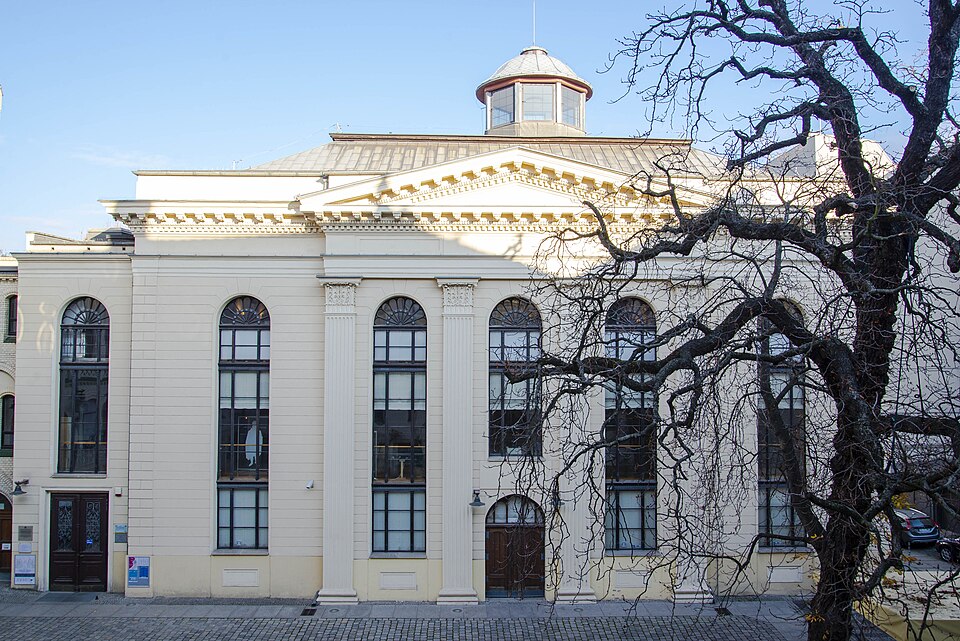
The White Stork Orthodox Synagogue (courtesy of Wikipedia)
Perhaps that's why the place gave off a slightly somber air...
WROCLAW, POLAND--Whenever we travel, Sam books months ahead to secure our hotels, the must-see tours, and a few choice dinner reservations. But we still enjoy the pleasure of impromptu wandering to check out the local scene. Last August, while in the university town of Wroclaw, we read about an historic synagogue not too far from our hotel. The synagogue’s name was picturesque, almost like one of Aesop’s fables: the White Stork. We had only one day to explore Wroclaw (sometimes known as Breslau or Vratislav), and numerous suggested points of interest. Yet my gut told me that the White Stork, located in the heart of the city’s former Jewish quarter, would be worth a visit, probably because of an experience we’d had a few years earlier on the island of Crete.
We’d been roaming through the narrow streets of the charming old port city of Chania when Sam and I encountered the melancholic Etz Hayyim (Tree of Life) Synagogue. Dating back to the 14th and 15th centuries with Venetian roots, the lovingly restored building looks like a jewel box in a peaceful garden, yet the story of how the Jewish population (about 300 persons) had been wiped off the face of the island by the Nazis makes this community center feel somber as a mausoleum.
I was intently absorbed by the Hebrew writing on a Tree of Life motif, staring at the mysterious characters and thinking, What the heck does it say? Lord, help me to understand this, when an American couple sidled over beside me to look at the Hebrew words. The husband started to translate – somewhat haltingly – to his wife. I turned toward them to offer a friendly greeting. The instant that they recognized me as a fellow American, bumping into them way over here in Crete of all places, a kinship blossomed. The wife flashed a smile and made a joke about none of us being able to read Hebrew like we should. Right?
She shrugged and laughed it off. Turns out they were from Cincinnati. When I revealed that I was not a Jew, but rather a Christian from Charleston, South Carolina, she looked surprised and then, uncomfortable. A case of mistaken identity. We thought you were one of us, and now that you aren’t—goodbye. With a rush of words, I tried to express that I felt an affinity with the Jewish people. It was no use. The door shut in my face.
It felt rather crushing, but I could not make them understand that, in my imagination, I have marched around the walls of Jericho and blown shofars under the leadership of Joshua; I have clashed swords with brawny Philistines in battles for the Promised Land. I have slipped into Holofernes’s tent and stood by the lambskin bed of the drunken Assyrian general while the beautiful and brave Judith chopped off the wretch’s head. The history of the Hebrew people is a shared history with Christians; I sense a connection to my own soul’s destiny when visiting Jewish houses of worship or Jewish museums.
Yet from the street, the White Stork was unassuming, tucked behind office buildings in a small, urban courtyard. With its rectangular shape of limestone, the building reminded me of a three-story French girls’ school. Was this even the right place? My eyes surveyed the bland, neoclassical façade, finding my answer in the Star of David placed above the front doors.
When we entered the lobby, we encountered an armed guard who had the sinewy look of a Polish military fighter: blond crewcut, steely expression, muscular body wearing a display of loaded firearms. Seeing automatic weapons in a sacred place always turns my stomach, a reminder of the constant need for God’s people to protect themselves against the brainwashed adherents to hateful cults and ideologies.
I was relieved to learn from the guard that The White Stork still functioned as a place of worship. This is rather the exception. Many synagogue buildings were orphaned due to the Nazi genocide, which exterminated 90 percent of the Polish Jews, followed by the post-war exodus of Jews relocating to more tolerant lands, such as Israel, the States, Canada, South America. Today, you can visit former synagogues that have been converted into pseudo-spiritual spaces such as art galleries. Even The White Stork was wrested in and out of Jewish control over the years, before more recently returning to its original purpose as an Orthodox synagogue.
I never could comprehend why anyone would dislike God's Chosen People. To my surprise, soon I was feeling the sharp edge of exclusion. The guard informed us that non-Jews were forbidden from entering the sanctuary. What? Don’t they know that we are on intimate terms with their same God? Sensing my displeasure, the guard waved a hand toward a hallway and told us that visitors were allowed into a second-story balcony over the main hall. We climbed a flight of stairs and entered a boxy-shaped space that felt like being inside a container of vanilla ice cream: white, plain, and quiet. We were apparently in the Women's Galleries. As I looked down, an impressive decoration stood out from the center of the floor—a black and gold mosaic of the Star of David enclosed in a circle.
Before the Holocaust, Poland had been home to a burgeoning community of more than three million Jews, the highest population in all of Europe. Occupied Poland, whose hinterlands hid the twin evils of Auschwitz and Birkenau, was a convenient place for the Nazis to keep the worst extermination camps away from the gaze of the German public. The Allied victory brought the eventual discovery of the death camps, but the liberation arrived too late for most of the victims.
Perhaps that gut-wrenching history is why the White Stork gave off a slightly somber air. I took a seat in stiff metal chair facing the balcony’s railing and surveyed the lower room. Built into the main wall stood what looked like a tall door frame with gold-leaf décor. This must be the Ark of the Torah, the holiest place in a Jewish house of worship. Two elongated windows flanked the Ark, and a stark low-riser stage was laid out, holding only a menorah on a pedestal. The place felt like an empty theater stage between engagements rather than a gathering place ready for worship services. There were no musical instruments, no candles, no kneeling pads, no banners or flags, no speaker’s podium. It felt like a formless moment waiting for something to take shape. Only two other visitors were in the balcony. The experience of vacancy was an invitation to dive inward. I closed my eyes and dropped into a spiritual centering, tuning my heart to the God channel.
The vanilla blankness evaporated. Immediately a swirling windstorm of anguished emotions presented themselves. This space was awash with pain. Haunting shapes of fear, loss, trauma, and anger whirled around the sanctuary. As I sat with this, my mind received information. Mothers were weeping over the loss of children. Children were reaching out and screaming for their parents. It felt as if the people of the synagogue had been ripped from limb to limb, as families were ruthlessly torn apart and destroyed during the Nazi occupation. In the ancient and ongoing Hebrew tradition known as keriah, people publicly rip their clothing as a sign of mourning, but those clothes would eventually be repaired as the wheel turned and life continued. This rending of precious lives was a butchery that could never be sewn back. The brutality of such evil is shocking, and its echoes were still reverberating. I could faintly hear the ghost of those distant cries of grief. (Later on Wikipedia, I would discover that the Nazis used The White Stork as a warehouse for stolen Jewish goods, and that Jews had been herded into the courtyard before being shipped out to concentration camps.)
How can all this energy still be trapped in this holy building? As I asked this in my mind, an answer came. Because there was no one who could take it away, no one who was strong enough to bear it, no one who was powerful enough to make it right. Tears flooded down my cheeks and spilled onto my neck. Soon I was keening in gasps, struggling to breathe through my tears, tasting a salty sip of the bitter drought that had been fermenting here for more than 80 years.
I knew the One who could open the steam-release valve. Jesus, Jesus, Jesus…I whispered his name, asking the loving Lord Jesus to intervene on behalf of the sorrowful hearts. Whether living or dead, the injured souls attached to these emotions of devastation could still be comforted and consoled. A surge of the Holy Spirit ignited my prayers, and I could sense the oppressive clouds of trauma beginning to move. It felt as if Jesus had been waiting to be invited into this place, waiting to unleash his healing, loving power. Jesus stood ready to take these burdens on his shoulders and carry them.
The battle between good and evil continues, across time and space. We carry our scars, our distress, our broken hearts to the altar of mercy, trusting that only God can transform our dry bones into flesh (Ezekiel 37:1-14). The prophet’s vision reveals God’s power and proclivity to transform the dead back into the living. Jesus leads the way out of the Valley of Bones for us, so that we can align ourselves with God’s healing spirit and receive new breath into our souls. It’s a profound mystery how God can take away our worst afflictions and remove the barriers which have blocked our access to holistic healing.
A large part of recovery always involves surrender. First, it’s surrendering to the reality of the surpassing, inclusive, and eternal nature of Divine Love. Next, we are asked to surrender our flaws and faults, acknowledging our need to be forgiven, both individually and collectively (as a group, nation, or even as a species) for wrongs committed against God and man. Only by grasping our need for God’s forgiveness can we find the compassion even to contemplate the idea of forgiving others. The reality of evil means that we must be ready to protect ourselves and our nations. Whether it’s Hamas trying to destroy Israel or Iran building nuclear weapons, the physical presence of destructive power demands strong countermeasures to disarm the aggressors and reestablish a lasting peace.
But walking with God means that we must resist the inclination to view people or whole societies as expendable. Ultimately, as those who share a planet and a genetic blueprint, we must either learn to live well together, or we will die horrifically together. Yet we push back against this concept of mutual dependency. Am I my brother’s keeper?
My intensive prayer work lasted about 25 minutes; it felt as if God were sweeping away the oppressive demons of the torturous past. It was a privilege to be allowed to call the Spirit of Christ into midst of such pain. The evil had begun to be flushed out. A sense of peace stirred the air around me. My legs were shaky when I got up to leave. I had cried every tear in my possession. When we got outside, my husband looked at me with concern. “I’m not sure you had better go on the Auschwitz tour tomorrow,” he said. Luckily, Sam had selected the three-hour concentration camp tour instead of the grueling six-hour experience.
I looked back at him, surprised by my new sense of calm. “It’s okay. Now I am ready to face it.”
NB: some historic facts and dates were supplied via Perplexity, an AI powered answer engine that I highly recommend.
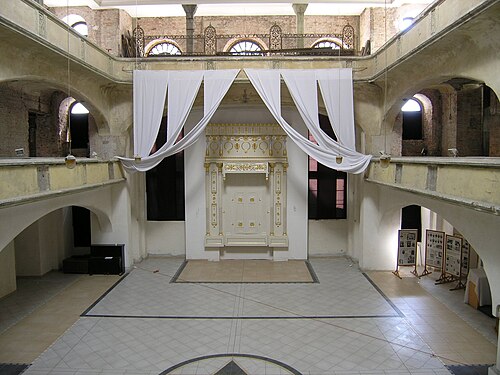
Main hall of The White Stork (Wikipedia)
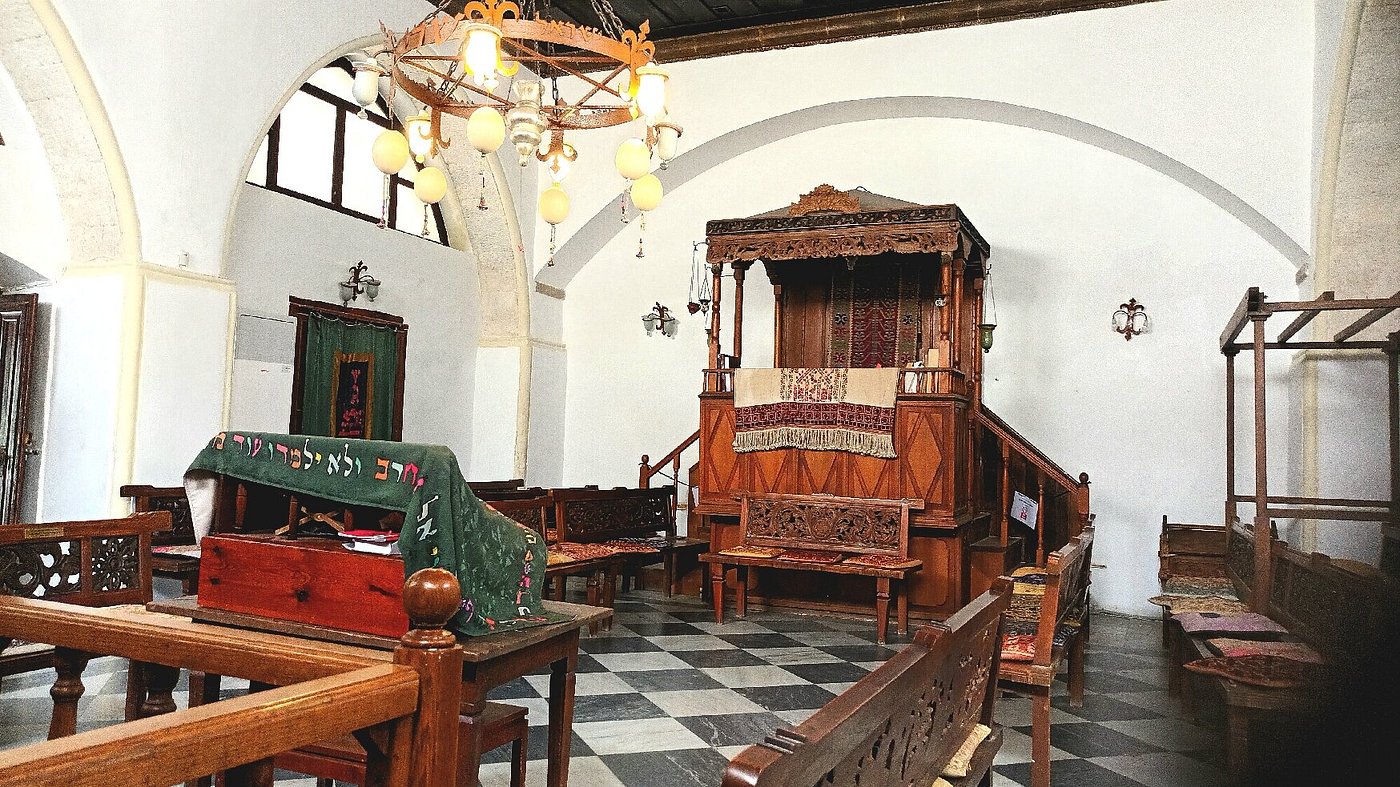
Tree of Life in Chania (courtesy of TripAdvisor)